
Research
Research in Diverse AI aims to further socio technical understandings of how to democratise the purpose, use and access to AI and data driven technologies. Research projects are inter-disciplinary and collaborative and aim to create breakthroughs in new AI algorithms, supporting architectures, processes, input datasets, evaluation and governance.
Diverse Spectrum - A Diverse Image Dataset
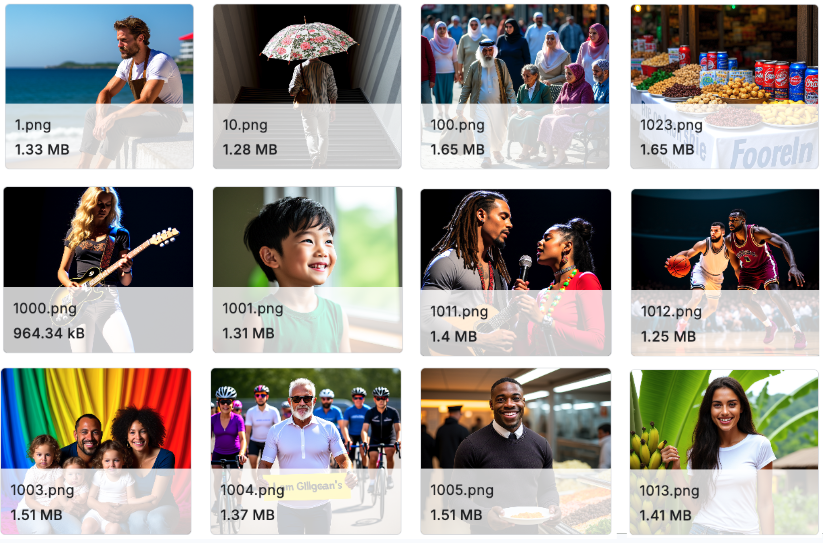
Beyond the Algorithm: A Community-Curated Visual Dataset.
Developed using participatory methods working with Diverse AI’s community and responsible data collection methods.
Research Project: Building Diverse Datasets using Community Participatory Research
In 2026, there are still 2.6B people in the world today without access to the internet - this represents one-third of the world’s population. This also means these cultures and people are not represented in any existing image datasets. These people are at risk of cultural erasure and extinction.
Using community participatory research methods, we’re working on closing this gap by creating a 7 Million diverse image dataset that reflects key characteristics of peoples and cultures from the Global South, and other underrepresented groups - who are usually mis-represented in AI datasets. These groups include: BAME, LGBTQ+, Disabled, different age groups, religious groups, and women. Datasets will be built responsibly and ethically, adhering to Open Data Institute’s (ODI’s) data ethics guidelines and will include data ethics practices from Toju Duke’s Responsible AI framework.
We’ll work with communities to ensure consent and compensation for their participation, with ongoing financial support for participating communities.
In line with the United Nations SDG goals, this research project aligns with SDG 17.18 - Partnerships for the Goals, providing reliable data from developing countries disaggregated by gender, age, race, ethnicity and geographic location. It also addresses SDGs 10, 5, and 1 by reducing the Digital Divide, the Digital Gender Gap, and identifying the Digital Poor.
This project offers a solution to the UN’s “Leave No One Behind” (LNOB) principle, the central, transformative promise of the UN’s 2030 Agenda for Sustainable Development and its SDGs, representing the commitment of all UN Member States to eradicate poverty in all its forms, end discrimination and exclusion, and reduce the inequalities and vulnerabilities that leave people behind and undermine the potential of individuals and of humanity as a whole.
This project will be carried out across 35 countries spanning Africa, and South and East Asia. For more information on this project, contact research@diverse-ai.org.

Fellowship Project: Inclusive Futures: Radical Ethics and Transformative Justice for Responsible AI
Led by Dr Sanjay Sharma from the University of Warwick, this fellowship challenges mainstream AI development by amplifying the voices of marginalized communities. It promotes an understanding of AI’s complexities from alternative perspectives by identifying values and future visions aligned with anti-oppression, grounded ethics and societal responsibility. Drawing from abolitionist cultural politics and creative practices, it aims to develop an inclusive ‘responsible AI’ framework.

Developing Critical AI Cultures
Diverse AI in partnership with the University of West England (UWE) and the University of Sheffield co-designed and hosted an online dialogue on the cultural implications of AI technologies as part of the “Patterns in Practice“ research project. This project is funded by the Arts and Humanities Research Council (UKRI).
Read the full report here: Developing Critical AI Cultures - Dialogue Report
